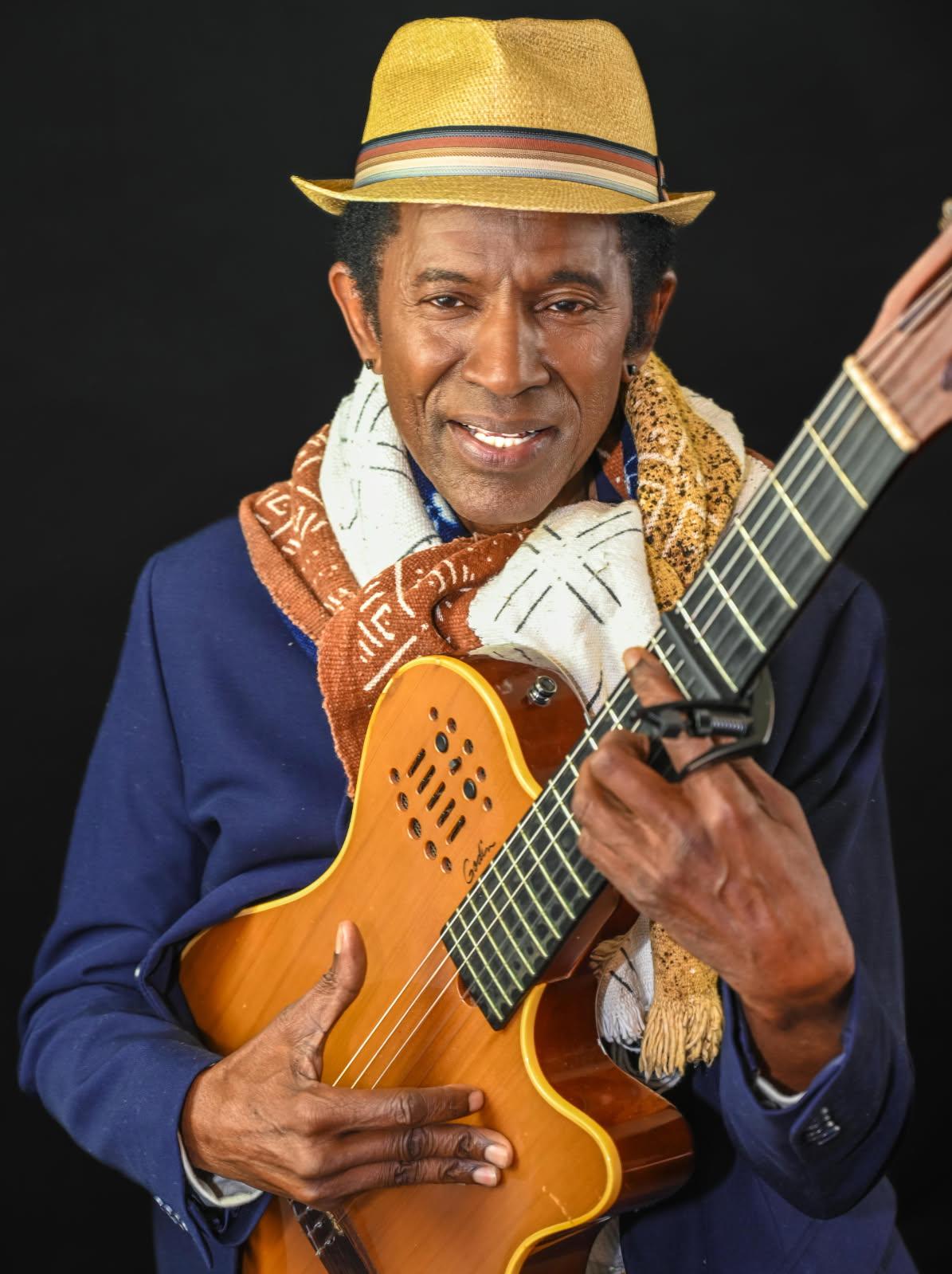
Zé Manel Fortes
Musician • Composer • Cultural Advocate
An African Voice with a Global Resonance
Zé Manel Fortes is one of Africa's most influential and internationally respected musicians — a visionary artist whose work bridges cultures, generations, and continents. Born in 1957 in Bissau, he emerged from West Africa with a powerful artistic voice rooted in tradition yet shaped by a global journey.
From an early age, music defined his path. As a child, he explored rhythm through improvised percussion before joining the Scouts of Bissau, where structured musical training helped shape his discipline and creativity. It was within this environment that he became one of the founding members of Super Mama Djombo, a groundbreaking orchestra that would become a symbol of African identity and resistance during Guinea-Bissau's struggle for independence. By the age of 11, he was already performing as the band's drummer, contributing to a movement where music and history became inseparable.
As he matured, Zé Manel expanded into songwriting and poetry, transforming personal expression into powerful social commentary. Influenced by the ideas of Amílcar Cabral, his work began to reflect broader themes of freedom, justice, and African consciousness — elements that continue to define his music today.
From Africa to the World
In 1982, he launched his solo career with Tustumunhos di Aonti ("Yesterday's Witnesses"), a bold and politically charged album that challenged post-independence realities. Its impact was immediate and far-reaching, leading to political pressure that ultimately led to his relocation abroad — a turning point that expanded his artistic journey beyond Africa.
His path took him through Portugal and France before settling in the United States, where he established himself as an international artist while remaining deeply connected to his African roots. Singing in Kriol, Portuguese, English, and French, Zé Manel developed a unique global sound — one that blends traditional African rhythms with contemporary influences, carrying messages that speak to universal human experiences.
His lyrics are as declamatory and evocative as his rhythms are irresistibly danceable. Through his music, he celebrates love for family and friends, promotes respect for women, and expresses deep compassion for children — while also addressing social realities with honesty and conviction.
His 2001 album Maron Di Mar marked a major international breakthrough, earning recognition at the Kora Awards. He followed this with African Citizen (2004), a powerful statement on unity and global consciousness, which received critical acclaim and international honors, including recognition at the Just Plain Folks Music Awards, where his song Voz do Sangue was awarded Best Song of the Year.
Innovation and Cultural Legacy
A constant innovator, Zé Manel has continued to push the boundaries of African music. His 2006 album Povo Adormecido ("My People Are Asleep") combines vibrant rhythms with messages addressing migration, inequality, and resilience — themes that resonate worldwide.
In 2007, he composed Bintou Were, widely recognized as the first modern African opera, performed in multiple African languages. This groundbreaking work stands as a milestone in global music, highlighting his role as a pioneer in bringing African artistic expression to new international forms.
A Lasting Impact
Beyond performance, Zé Manel is deeply committed to cultural development. In 2010, he returned to Guinea-Bissau to invest in the future of African music, co-founding Cobiana Records and launching initiatives such as the Festival de Bubaque to support emerging artists and strengthen the creative economy.
His later works, including Nha Alma (2018) and História Fala (2019), reaffirm his enduring relevance across generations, connecting with new audiences while preserving the depth and authenticity of his message.
Today, Zé Manel Fortes is more than a musician — he is a global cultural ambassador of African music — an artist whose voice continues to carry the stories, rhythms, and spirit of Africa to the world.
Awards & Accolades
Kora Awards Nomination (South Africa) – Maron Di Mar (2002).
Best African Music Album of the Year – African Citizen (2004).
Just Plain Folk Music Awards (USA) – Voz do Sangue awarded Best Song of the Year (2007).
International Recognition – Composer of Bintou Were, the first African opera (2007).
Winner of the Lusophone Award — Music Category – (2022).